Behaviour and school engagement
Working through what sits behind the behaviour — regulation, triggers, relationships and finding a way back into lessons.
Mentoring in secondary schools
I'm Jerry Noel Ilé. I work alongside pastoral and safeguarding teams to support students whose behaviour, anxiety, low mood or past experiences are getting in the way of school. Weekly sessions, clear notes, and safeguarding handled properly.
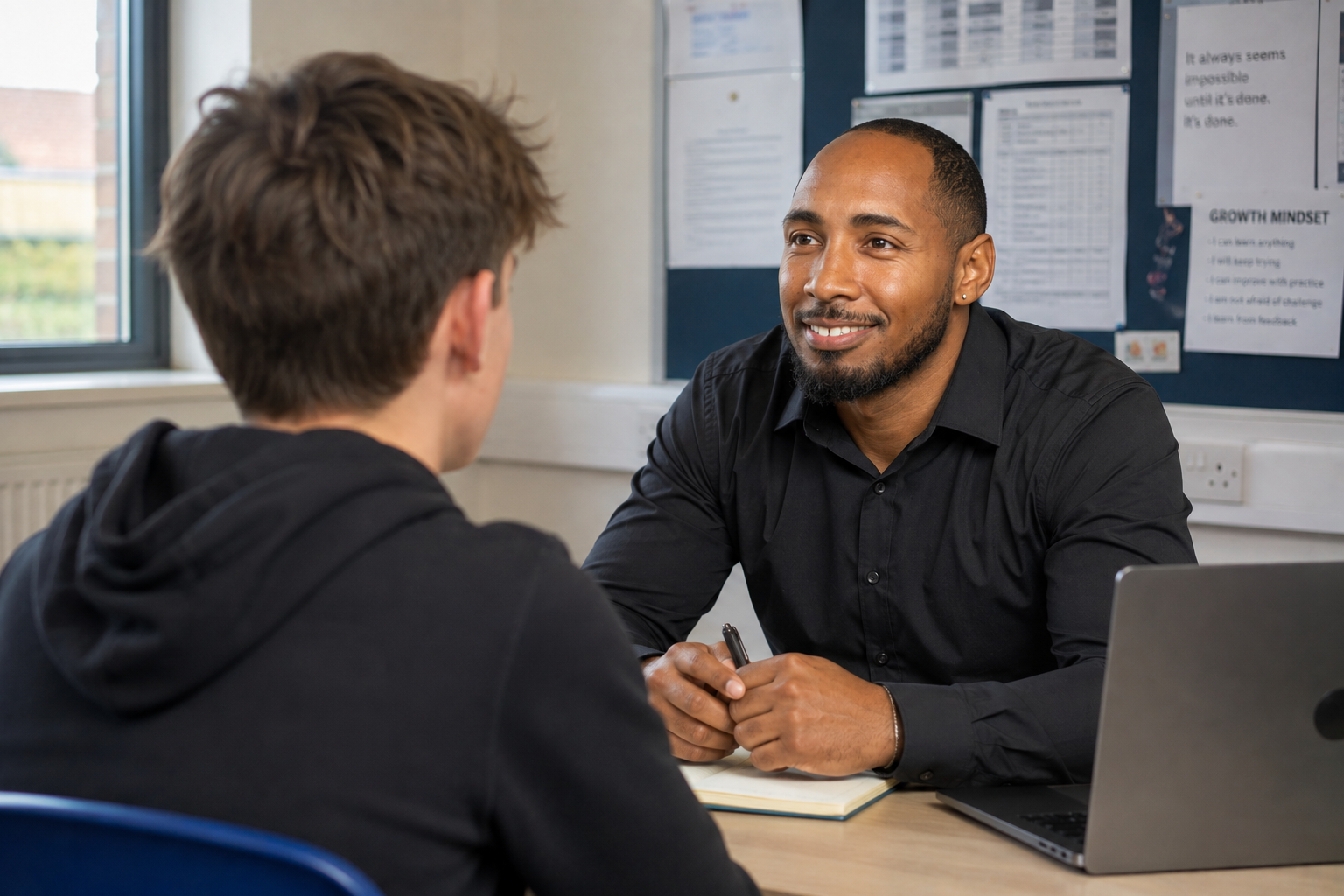
Over three years of mentoring teenagers, these are the themes that come up most often.
Working through what sits behind the behaviour — regulation, triggers, relationships and finding a way back into lessons.
A steady, paced space for students carrying difficult experiences, with grounding and coping strategies they can use day to day.
Non-judgemental conversations about urges and triggers, alongside safer alternatives and clear safeguarding routes.
Careful, calm listening, with immediate escalation to your designated safeguarding lead and a written record for CPOMS whenever risk is disclosed.
Practical work on worry, avoidance, exams and social pressure, building tolerance a step at a time.
Rebuilding routine, motivation and connection, with a mentor who keeps showing up week after week.
Mentoring is not therapy or a crisis service. Where a student needs clinical support, I signpost and work with your safeguarding lead to get them there.
Designed to fit around your timetable and your existing pastoral processes, not to sit alongside them.
We talk through your cohort, your pastoral priorities and where mentoring would make the biggest difference.
Students are referred by your pastoral team and slotted into fixed weekly periods that fit your timetable.
Consistent, confidential sessions in school, with each student's plan and next steps carried between weeks.
Session summaries are recorded for continuity, and anything of concern is escalated to your DSL and logged for CPOMS.
Mentoring provision is often hard to evidence. Alongside weekly session notes, I put together a termly summary for your pastoral lead and SLT: session completion and engagement, the themes coming up across the caseload, and where I think the provision should go next.
Where your MIS can export attendance and behaviour data, I'll work with it and report each mentored student against their own baseline rather than a cohort average. Before moving into schools I spent seventeen years in business analysis and data, building reporting for large organisations — so turning school data into something a governing body can act on is familiar ground.
We agree the shape of the reporting together at the start, so it's useful for pupil premium accountability and governor reports rather than another document nobody reads.
A different kind of session

Some young people find it much easier to talk while they're moving. In a Hit and Release session we box together while working through the things that have come up — giving repressed emotion, aggression and anger a healthy, constructive outlet rather than letting it come out in the classroom or at home.
It runs as a variation of the usual one-to-one mentoring session, so it's available both for school referrals and for individual clients. No boxing experience needed.
Talk to me about whether this would suit a particular student, or set it up alongside your existing mentoring slots.
Ask about Hit and ReleaseAlongside school work, I offer individual sessions for young people and families outside of a school referral — whether that's a short block of support or an occasional check-in. Get in touch and we'll talk through what would help.
In private one-to-one work, and only where it's appropriate and the client wants it, I also draw on mild hypnotherapy, NLP and EMDR processes. For anyone under 18 this is never used without written parental consent, it's explained in full beforehand, and it can be stopped at any point. It sits alongside mentoring rather than replacing clinical treatment — where someone needs therapy or medical care, I signpost.
Working with adults? See adult sessions — trauma, EMDR, Hit and Release and coaching
Jerry's mentoring has had a fantastic impact on students with highly complex needs. He combines a therapeutic approach with flexible ways of working that reaches students where normal support has not worked e.g. by using Boxing, Football or whatever the student's interests are. Jerry is adaptable and builds rapport quickly with young people, I have not known any student not to respond well to his support.
As a secondary school we highly value Jerry's work and recommend him to other schools. Our pastoral team will ask for Jerry to support students where the need is greater than pastoral support can provide. Jerry will run group work or individual sessions and also see students in the community. Without Jerry's work in our school many students would find it hard to cope successfully.
Whether you're a school leader, a SENCO, a DSL, a parent or a young person, send a message and I'll come back to you.